Cloud Computing job Salaries in India
Introduction
India is currently going through a massive digital transformation, one of the biggest in its history. Over the years, the country has moved beyond being just an IT outsourcing hub and is now emerging as a global center for innovation and advanced technology.
Technologies like cloud computing, artificial intelligence, big data, and automation are driving this change and reshaping how businesses operate.
Among all these, cloud computing has become one of the most high-paying and in-demand career fields in India. As companies rapidly shift their infrastructure to the cloud, professionals with strong cloud skills are now earning salaries that were almost unimaginable a decade ago.
Today, organizations across multiple industries including banking, healthcare, e-commerce, education, and manufacturing are actively hiring:
-
Cloud Engineers
-
Cloud Architects
-
DevOps Engineers
-
Cloud Security Specialists
In this guide, we will explore:
-
Cloud computing salaries in India
-
Experience-based salary breakdowns
-
Most in-demand cloud skills and roles
-
Key industry statistics and trends
-
Future scope and emerging technologies
-
How Weskill helps learners build high-paying cloud careers
About Cloud Computing
Before diving into salaries, it’s important to understand what cloud computing really is.

Cloud computing is the delivery of computing resources over the internet, including:
- Servers
- Storage
- Databases
- Networking
- Software
Instead of maintaining expensive physical infrastructure, companies can rent these resources on-demand, paying only for what they use.
Popular cloud platforms include:
- Amazon Web Services (AWS)
- Microsoft Azure
- Google Cloud Platform (GCP)
Why businesses adopt cloud computing:
- Scalability: Easily handle growth from 100 users to 1 million users
- Cost-efficiency: No need to buy physical servers or data centers
- Flexibility: Teams can work from anywhere in the world
- Reliability: High uptime and disaster recovery options
Professionals who can design, manage, and optimize cloud systems are now extremely valuable.
History of Cloud Computing Careers in India

Understanding the history helps explain why salaries have skyrocketed in recent years.
1. Early IT Infrastructure Era (1995–2010)
In the early days of IT, companies relied heavily on on-premise servers and physical infrastructure.
Job roles included:
- System administration
- Network management
- Hardware maintenance
Cloud computing adoption was minimal, and salary ranges were moderate. Most IT professionals earned between ₹2–6 LPA, depending on skills and company.
2. Adoption Phase (2010–2018)
Between 2010 and 2018, cloud computing started gaining traction:
- Startups and mid-size companies began migrating applications to the cloud
- Demand for cloud engineers grew steadily
- Salaries started to rise in response to specialized skills
Roles like AWS engineer, Azure developer, and DevOps professional became increasingly sought-after.
3. Digital Transformation Era (2018–Present)
From 2018 onwards, cloud computing became a business necessity:
Key drivers:
- Startup ecosystem growth
- Expansion of Global Capability Centers (GCCs)
- Remote work culture
- Explosion of digital services
Today, cloud professionals are among the highest-paid technology roles in India.
Scope of Cloud Computing in India
The scope of cloud computing has grown exponentially due to:
1. Rapid Digital Transformation

Industries adopting cloud-based solutions include:
- Healthcare
- Banking & financial services
- Retail & e-commerce
- Education & EdTech
- Manufacturing & logistics
Companies need skilled cloud professionals to design, implement, and maintain these systems.
2. Growth of Global Capability Centers (GCCs)
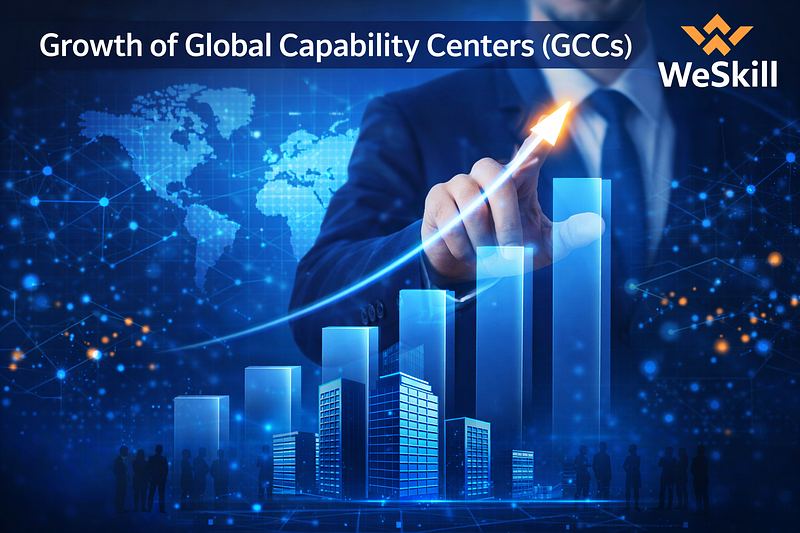
Many multinational corporations are establishing GCCs in India.
Roles required include:
- Cloud engineers
- Cloud architects
- DevOps engineers
- Cloud security specialists
These centers often offer high-paying roles with exposure to global projects.
3. Startup Ecosystem
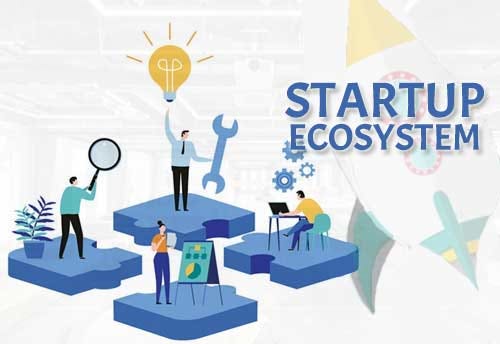
India has over 100+ unicorn startups. Startups rely on cloud platforms for:
- Scalability
- Fast product launches
- Cost-effective infrastructure
Cloud engineers at startups often earn competitive salaries, plus stock options and bonuses.
4. Remote Work Opportunities
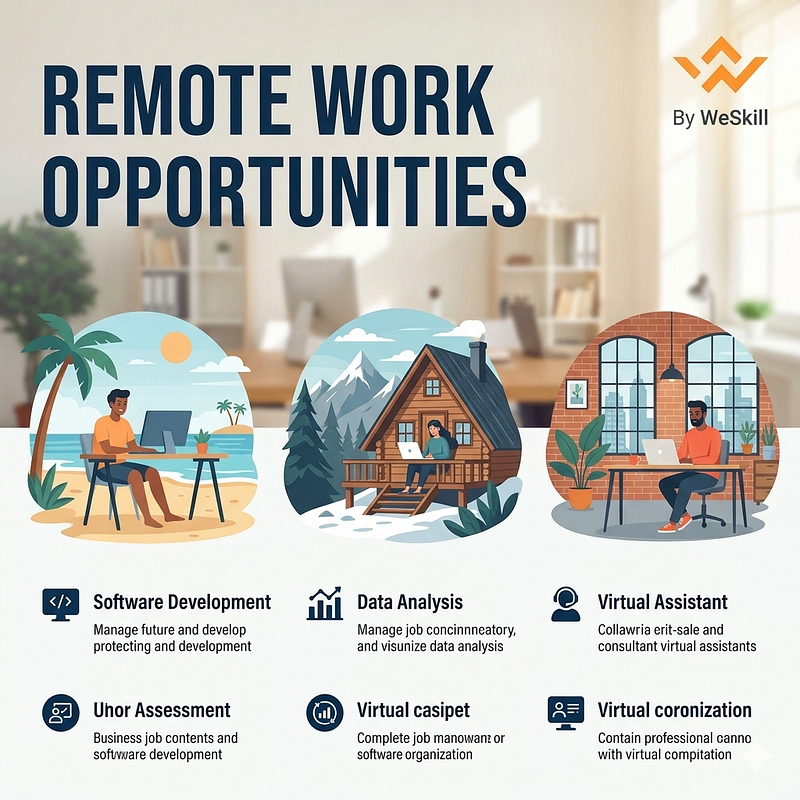
Cloud computing skills open doors to global remote opportunities, allowing professionals to earn international salaries without leaving India.
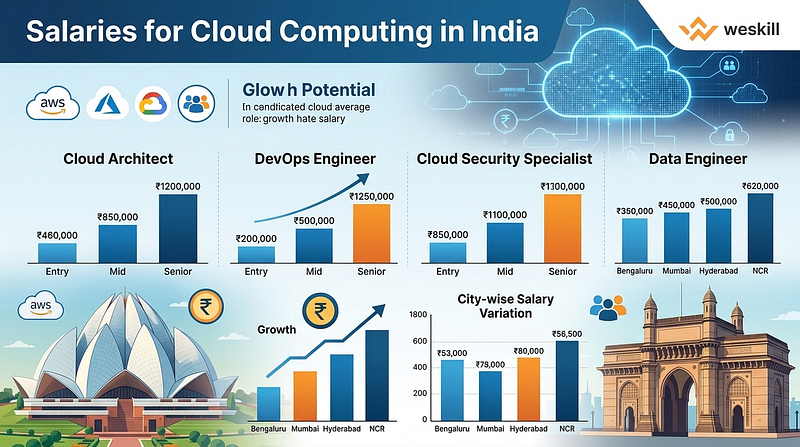
Salaries for Cloud Computing in India
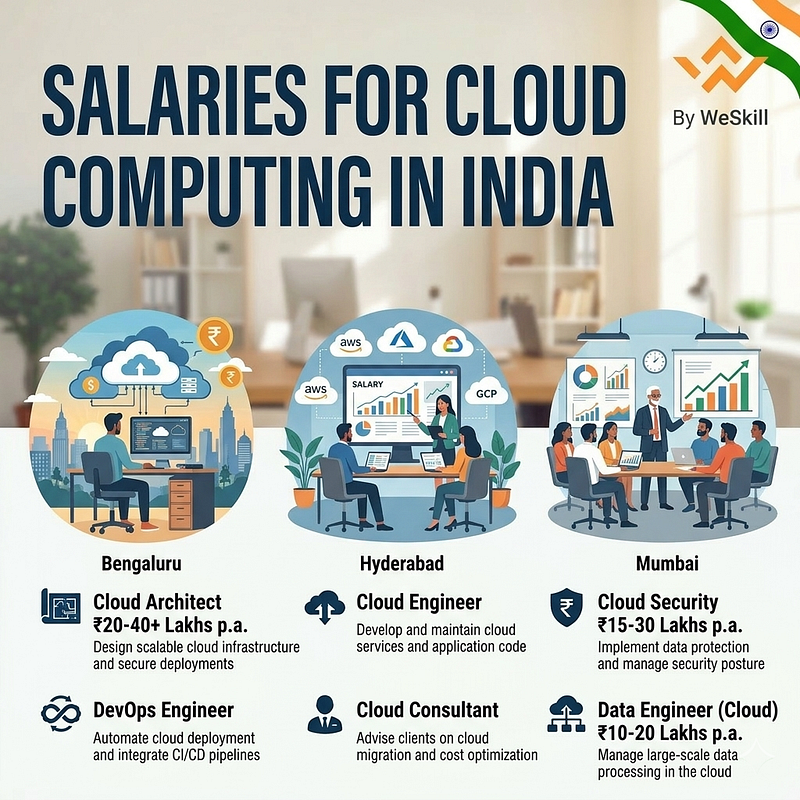
Cloud computing is one of the most lucrative technology domains today.
1. Salary Based on Experience
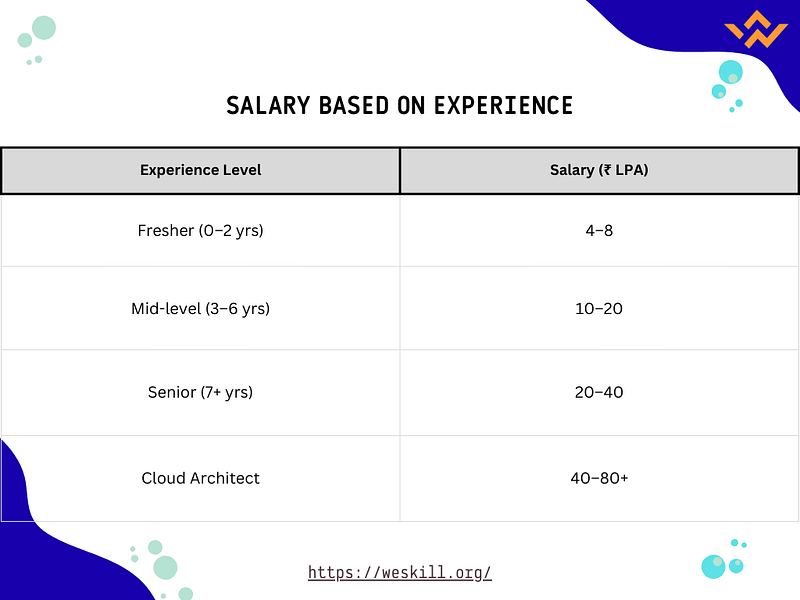
2. Salary Based on Roles

3. Salary Based on Skills
Specialized skills increase earning potential:
- AWS / Azure / GCP
- Kubernetes & Docker
- Terraform & Infrastructure as Code (IaC)
- CI/CD Pipelines
- Cloud Security & Compliance
Most In-Demand Cloud Roles
- Cloud Engineer: Deploy & manage infrastructure
- DevOps Engineer: Automate deployments & integrations
- Cloud Architect: Design enterprise-grade systems
- Cloud Security Specialist: Protect cloud infrastructure
Companies value these roles highly due to critical business dependency.
Comparison with Other Tech Careers
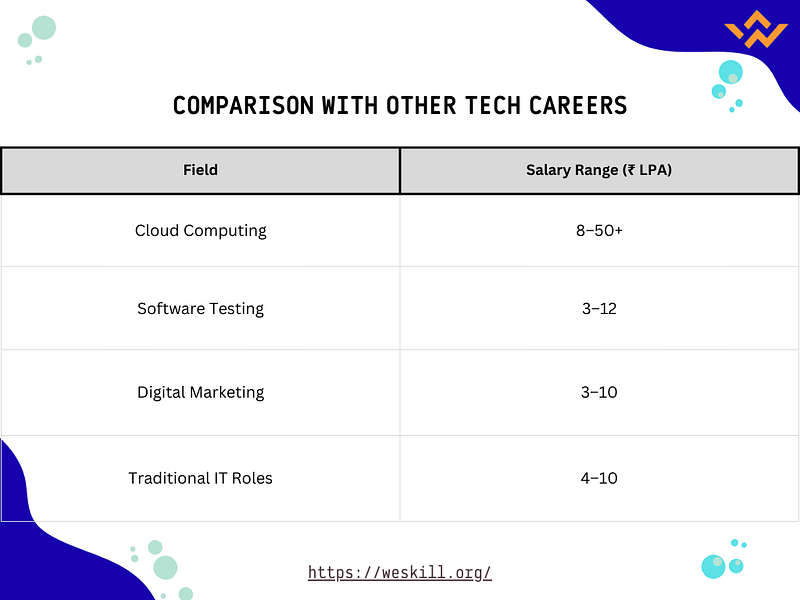
👉 Cloud computing offers faster career growth and higher salaries.
Numbers and Industry Statistics
- Cloud adoption in India is growing at 30–35% CAGR
- AWS, Azure, and GCP jobs are the fastest-growing roles in IT
- Skilled professionals often earn 50–70% more than traditional IT roles
Real-World Proof of High Salaries
Many professionals are earning:
- ₹30–60 LPA in product-based companies
- Remote salaries from global firms
- Stock options + bonuses in startups
Personal Experience & Career Insights

Success in cloud computing depends on skill, experience, and specialization, not just years of work.
Professionals who succeed:
- Continuously upgrade skills
- Work on real-world cloud projects
- Build strong portfolios
- Specialize in advanced areas like DevOps, cloud architecture, and cloud security
Many start from basic IT roles and transition into cloud careers, transforming their salary trajectory.
Why Skill-Based Learning is Important
Traditional education often focuses on theory, while industry requires practical experience.
Hands-on skills in AWS, Azure, DevOps, Kubernetes, and security are essential for career growth.
How Weskill Helps You Build a Cloud Career
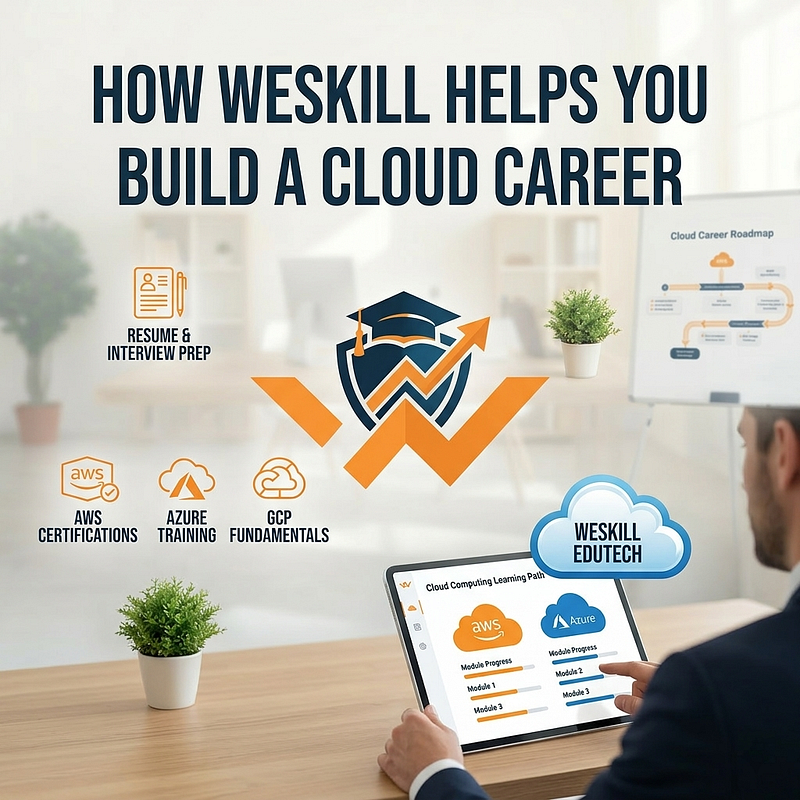
Weskill provides practical training, real-world projects, and mentorship for learners.
Learners can develop expertise in:
- Cloud Computing
- DevOps
- Data Analytics
- Automation Testing
This ensures industry-relevant skills and job readiness.
Why you Choose Weskill ?
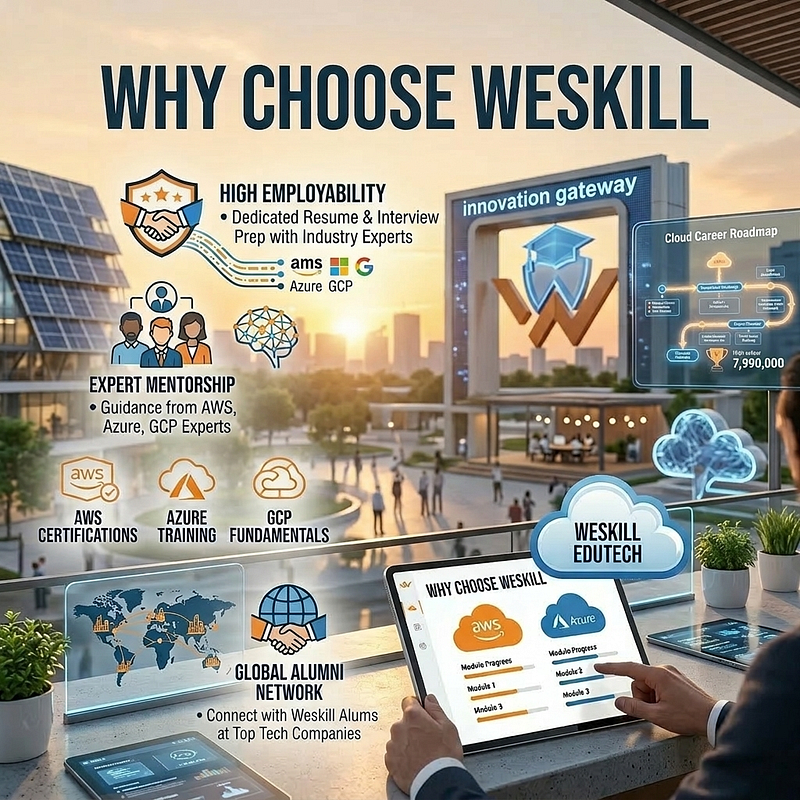
Choosing the right platform to learn cloud computing or any advanced technology,can make all the difference between knowing concepts and landing a high‑paying job. At Weskill, the focus is not just on teaching theory, but on building real, job‑ready expertise that companies value.
Here’s how Weskill stands out:
1. Industry‑Focused Curriculum
Unlike traditional courses that are often outdated or purely academic, Weskill’s curriculum is built around real industry needs.
- The cloud computing programs at Weskill are designed by professionals who work with cloud technologies like AWS, Azure, and Google Cloud Platform (GCP) every day.
- Students learn exactly what employers are looking for — from setting up cloud infrastructure to deploying applications using DevOps tools, automating processes with CI/CD pipelines, and managing scalable environments.
This means you’re not studying obsolete topics — you’re learning skills that the industry pays top money for today.
2. Hands‑On Projects
One of the biggest challenges most learners face is the gap between theory and real work.
Weskill solves this by giving students practical, real‑world cloud projects that simulate what professionals do on the job:
- You deploy real cloud infrastructure
- You work with live environments
- You troubleshoot real issues
- You create solutions that are production worthy
This hands‑on experience builds confidence and makes your portfolio strong not just a list of certificates.
Employers don’t just hire people who know, they hire people who can do.
3. Career‑Oriented Training
Weskill isn’t just about teaching cloud skills — it’s about helping you prepare for a career.
That’s because their program includes:
✔ Resume building specific to cloud roles
✔ Interview preparation tailored for cloud & DevOps jobs
✔ Real scenario problem solving
✔ Mock technical interviews with real questions from companies
This means when you complete Weskill’s cloud program, you’re not just certified,you’re job‑ready.
Weskill helps bridge the gap between learning and getting hired.
4. Mentorship from Industry Experts
Learning alone can be overwhelming ,especially in a tech field as broad as cloud computing.
Weskill delivers personalized mentorship by connecting you with professionals who are actively working in the industry.
- You get help when you’re stuck
- You get real world insights, not textbook answers
- You learn how to think like a professional cloud engineer
Mentors guide you through:
- Best practices
- Real scenarios
- Evaluation of your project work
- Career advice based on actual job market conditions
This level of mentorship accelerates your learning and ensures you build confidence, not just knowledge.
How Weskill Helps Fast‑Track High‑Paying Cloud Careers

Weskill is not just a learning platform -it’s a career‑building ecosystem. Here’s how it empowers you:
🔹 You Learn What Companies Actually Want
No fluff, no filler-only skills that recruiters are paying top salary for (cloud, DevOps, security, automation).
🔹 You Get Job‑Relevant Portfolio Projects
Instead of textbook examples, you work on real cases you can show during interviews.
🔹 You Get Support From People With Experience
Everyone from mentors to curriculum designers are people who have been in the industry.
🔹 You Get a Roadmap, Not Just Lessons
From beginner to cloud engineer,every step is structured so you know where you’re going and what’s next.
Example: From Learner to High‑Paying Cloud Professional
A typical journey with Weskill might look like:
📌 You start as someone curious about cloud
📌 Learn basics of AWS + Azure
📌 Build hands‑on projects
📌 Get feedback and mentorship
📌 Prepare resumes and interviews
📌 Land an entry‑level cloud job
📌 Within months, upgrade skills and earn higher salary
This is how Weskill helps learners go from:
✔ Confused beginner
to
✔ Job‑ready cloud professional
and then to
✔ High‑earning expert
Future Scope of Cloud Computing

Cloud computing is continuously evolving. Emerging trends:
- AI + Cloud Integration
- Serverless computing
- Edge computing
- Multi-cloud architecture
Professionals who adopt these skills early will command premium salaries.
Conclusion

Cloud computing is one of the most important and highest-paying career paths in India.
With increasing adoption of digital technologies, the demand for skilled cloud professionals will continue to grow.
Success requires:
- Continuous learning
- Hands-on experience
- Skill specialization
Weskill helps learners acquire industry-ready cloud skills, preparing them for high-paying roles in India and globally.
Final Thought
“The future belongs to those who master cloud computing.”
About the Author
This article is brought to you by the Weskill Team, dedicated to helping learners acquire industry-ready technology skills.
At Weskill, we focus on providing:
- Hands-on projects for real-world experience
- Career-oriented training for high-paying roles
- Mentorship from industry experts to guide learners through cloud computing, DevOps, data science, and more
Our mission is to empower learners to build in-demand skills, stay future-ready, and achieve career growth in today’s rapidly evolving tech landscape.

Comments
Post a Comment